Grease Trap and Interceptor Pumping in Florence, SC
Call and we will connect you with an independent local provider.
CALL NOW: (843) 960-3805Restaurants, cafeterias, church kitchens and other food businesses send fats, oils and grease down their drains every day. A grease trap or grease interceptor catches that grease before it clogs sewer lines or a septic system, but only if it is pumped on schedule. Call (843) 960-3805 and we will connect you with an independent provider in the Florence area that services grease traps and interceptors. Florence SC Septic Pros is a referral service operated by Recover Profits Now. We do not pump tanks, inspect systems or dig drain fields; the independent provider you are connected with quotes and does the work.
Traps versus interceptors
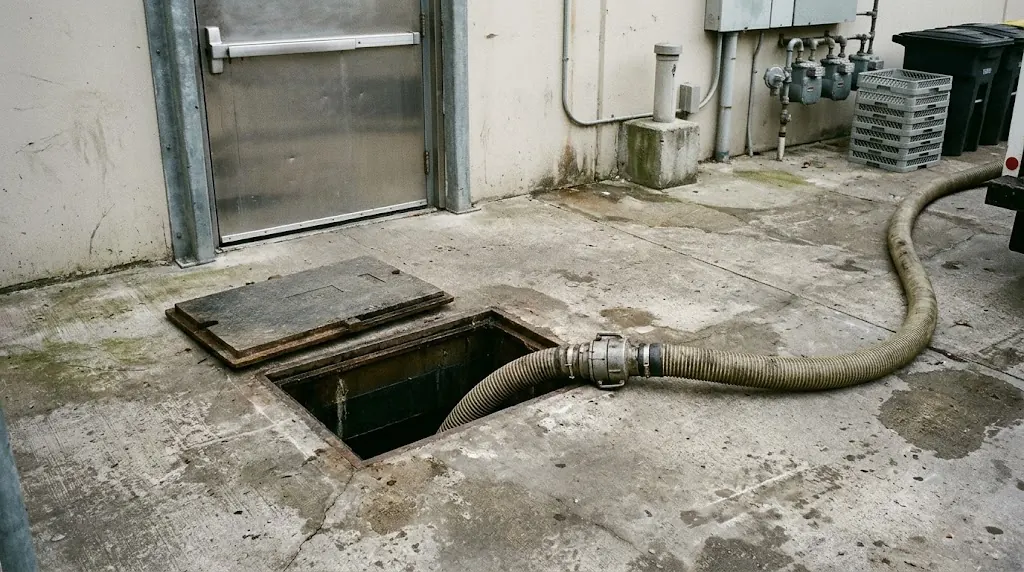
Grease traps are smaller units, often under a sink or in the kitchen floor, holding roughly 20 to 50 gallons. Grease interceptors are large in-ground tanks outside the building, often holding 500 to 1,500 gallons or more. Small traps are sometimes cleaned in-house; interceptors need a pump truck.
Signs it is time
- Slow sinks and floor drains in the kitchen
- Grease or food odors around the trap or the outdoor lids
- Grease showing up in downstream cleanouts or manholes
- The trap has reached the point your sewer provider or permit says it must be pumped
- It has been longer than your normal schedule
How often
There is no single schedule for every kitchen. It depends on the size of the trap and how much grease you produce. A busy fryer kitchen may need monthly service while a small café may go longer. A widely used rule of thumb is to pump before fats and solids fill about a quarter of the trap's depth. If your business is on public sewer, your sewer provider may set its own pumping and record-keeping rules, so check with them and keep every service record.
How a service visit works
- Open and measure. The technician opens the lids and checks how much grease and solids have built up.
- Pump out. The truck removes the grease, solids and water.
- Scrape and clean. Walls, baffles and inlets are scraped so the trap starts clean.
- Inspect. Baffles, tees, lids and gaskets are checked for damage.
- Paperwork. You get a service record showing the date, volume removed and condition. Keep these on file for inspections.
Typical costs
These are typical national-guide ranges from published cost guides, not quotes.
| Unit | Typical range per service |
|---|---|
| Small indoor trap (about 20 to 50 gallons) | Roughly $100 to $300 |
| Outdoor interceptor (often 500 to 1,500 gallons) | Roughly $300 to $1,200+ |
| Emergency or after-hours service | Usually higher; ask first |
What moves the price
Size of the unit, how full and hardened the grease is, how far the truck must run hose, disposal fees and the time of day all affect cost. Regular service contracts can lower the per-visit price and keep you on schedule, which avoids emergency calls during a dinner rush.
Timing
A small indoor trap can often be serviced in under an hour. A large interceptor may take one to two hours. Many restaurants schedule early in the morning or after closing so service does not interrupt the kitchen.
Florence-area sewer providers and grease
If your kitchen is inside the City of Florence, your wastewater goes through the city's sewer lines to the Florence Water Reclamation Facility, run by the City of Florence Utilities Department, (843) 665-3236. Elsewhere in the county, Lake City, Pamplico, Johnsonville, Coward, Olanta and Scranton run their own public water or wastewater systems, and the City of Darlington has its own Water and Sewer Department. Ask your provider what grease trap rules and pumping records it expects. Local news has covered sewer overflows into Jeffries Creek and the city's plans for a $50 million sewer upgrade. That coverage did not single out grease as the cause, but every sewer system depends on kitchens keeping fats, oils and grease out of the lines. Keep your service records where an inspector can see them.
Kitchens on septic
Some food businesses, church kitchens and event halls outside sewer service in Florence County and Darlington County drain to a septic system. Grease that gets past a neglected trap can clog the septic tank outlet and drain field quickly, turning a routine pumping into an expensive drain field repair. If your kitchen is on septic, keep both the trap and the septic tank on a schedule.
Kitchen habits that help
- Scrape plates into the trash before washing.
- Collect fryer oil in containers for recycling, never down the drain.
- Use sink strainers.
- Do not pour very hot water or enzyme products to push grease through the trap; it just moves the problem downstream.
- Train new staff on what goes down the drain.
Questions to ask a provider
- Are you licensed for pumping and hauling in South Carolina, and where does the waste go?
- Do you clean the walls and baffles, or only pump?
- Will you give me a written service record each visit?
- Do you offer scheduled service, and what is the per-visit price?
- What do you charge for emergency calls?
South Carolina permits and licenses
In South Carolina, septic systems (the state calls them onsite wastewater systems) are regulated by the South Carolina Department of Environmental Services, or SCDES. SCDES took over the septic program when the old Department of Health and Environmental Control (DHEC) was split into two agencies on July 1, 2024, so older paperwork and websites may still say DHEC. SCDES issues the permits for new systems and licenses the people who do the work: septic system installers, under a tiered license, and septic pumper/haulers who clean tanks and haul the waste. Ask any provider for their SCDES license before work starts, and ask whether your job needs an SCDES permit and who will apply for it.
Call (843) 960-3805 to get connected with a local grease trap service provider.
Call and we will connect you with an independent local provider.
CALL NOW: (843) 960-3805Frequently asked questions
How often should a restaurant grease trap be pumped?
It depends on the trap size and how much grease the kitchen produces. Busy kitchens may need monthly service. A common rule of thumb is to pump before grease and solids fill about a quarter of the trap. Check any rules from your sewer provider.
How much does grease trap pumping cost?
Typical national-guide ranges run roughly $100 to $300 for a small indoor trap and roughly $300 to $1,200 or more for an outdoor interceptor.
Do I need to keep grease trap pumping records?
Keeping a written record of every service is good practice, and your sewer provider or inspectors may ask for them. Ask your provider for a service record each visit.
Areas we serve
We connect callers across Florence, Darlington, Hartsville, Lake City and the Pee Dee region of South Carolina, including:
- Florence
- Darlington
- Hartsville
- Lake City
- Timmonsville
- Quinby
- Effingham
- Pamplico
- Mars Bluff
- Johnsonville
- Olanta
- Coward
- Scranton
- Society Hill
- Florence County
- Darlington County
Local pages: Darlington, Hartsville, Lake City.
Related services
- Septic Tank Pumping
- Septic Inspections
- Septic & Drain Field Repair
- New Septic Installation
- Emergency Septic Backups
Call and we will connect you with an independent local provider.
CALL NOW: (843) 960-3805